
Sharing Negotiation with the Next Generation
By Kristen Wall, NW Volunteer
What are the possibilities for young people who know negotiation skills? For Ambassadors at Negotiation Works, the answer is personal.
“If I’d had this [negotiation training] when I was a teenager, I’d probably have a degree, and I would not have had too much family conflict and run from home. I would have gone further than that if I just knew how to advocate for myself and my needs and listen without judgment,” says Kat, who signed up to be a Negotiation Works Ambassador after taking a class at Together We Bake in Alexandria. She credits negotiation training with helping her win custody of her son and recover from an abusive marriage–in a new country as an immigrant. Despite her personal challenges, she welcomes the opportunity to contribute. "Being an Ambassador is a way to give back to the community."
Any participant in a Negotiation Works class is eligible to join the Ambassadors program to bring negotiation skills training to their communities. Amy Cashman says she became an Ambassador because it aligned with her goals and values after her release from prison in January 2024 led her on a path of self-growth. “The experience has allowed me to continue learning, strengthen my personal and professional skills, and contribute to creating positive change in the lives of others,” she says.
In 2025, the Ambassadors taught negotiation to a class for teens for the first time. This year, six Ambassadors–Kat and Amy along with Earnest Hanible, Alexis Green, Hitomi Wince, and Shannon Sisney–signed up to bring negotiation skills to teens again at Life Pieces to Masterpieces, a program that helps young men in DC develop character and leadership skills through creative expression.
Earnest shared, “I wanted to give back to young men navigating environments where awareness, self-understanding, and the ability to negotiate can be critical to their safety and future. In spaces where small decisions can have serious consequences, these skills are not just helpful—they can be life-saving.”
For this second time around, Negotiation Works designed and implemented a more comprehensive “train the trainers” curriculum to support the Ambassadors in gaining strong facilitation skills for this project and beyond, and several volunteer instructors served as mentors to the Ambassadors throughout their training. “After reviewing what we did last year, we refined the curriculum this year to focus on necessary lessons–listening, perspective taking, defining negotiation, and being able to model and role play effective negotiating,” says Negotiation Works Programs and Evaluation Coordinator Isa Salazar, who organized the training.
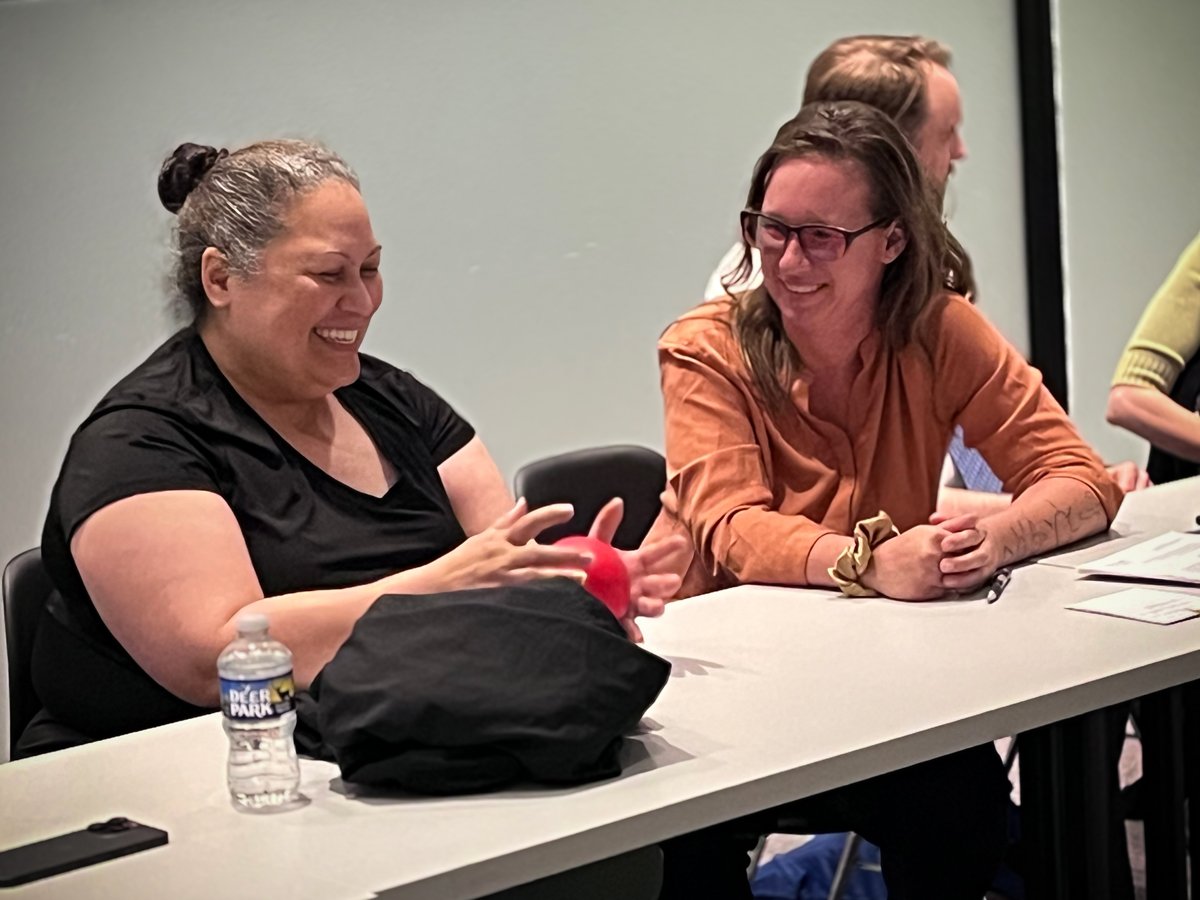
Hitomi and Amy practice one of the activities they will share with youth.
As a result, the Ambassadors went through a rigorous training process which included over a dozen hours of instruction and practice time, plus a dress rehearsal with live feedback.
Several volunteers who teach Negotiation Works classes served as mentors to offer feedback and support to the Ambassadors throughout their training. This was Phuong Lue’s second year in this role. “As mentors, we are able to adapt our instruction with the presentation or facilitation. It's not just supporting the Ambassadors in delivery but also [providing] the social emotional support to build their self-efficacy and their confidence and their trust –that whole experience is really heart warming.”
After much training and practice, May 16 was showtime. Close to twenty teens (called “brothers” at Life Pieces to Masterpieces), ages 13 to 19, turned out to learn about listening, perspective taking, and resolving conflict through negotiation. The Ambassadors led the teens through activities such as identifying the perspectives of two best friends disagreeing over attendance at a party; naming effective listening strategies when in a heated dispute; and role-playing a conflict between a carry-out owner and a teen dissatisfied with his order.
The experience was energizing for everyone involved. “It was amazing,” Kat said. “The kids all left positive feedback. They were engaged, and they were interested. They said they learned something new, which was the whole point of the class.”
For Earnest, “the most rewarding parts of the experience were the genuine interactions I was able to share with a few of the young men. Those moments of connection made the work feel real and impactful beyond just teaching. As much as I poured into them, I walked away with a reminder not to take myself too seriously and to stay grounded. This was indeed an awesome and very memorable experience.”
“The most rewarding part of teaching Life Pieces to Masterpieces was working with the kids,” Amy agreed. “They were engaged, open, and a pleasure to work with. It was rewarding to feel that I was able to make a positive impact on them while also growing in my own ability to teach and connect with others.”
Ambassadors brought their own creativity and ideas to the curriculum. Kat said, “Being able to see a group flowing with each other in such synchronicity, it was lovely. Everybody has a voice, listens, and values others’ input, and we collectively take it all. A lot of it was a creative force–what can we create or do for our community.”
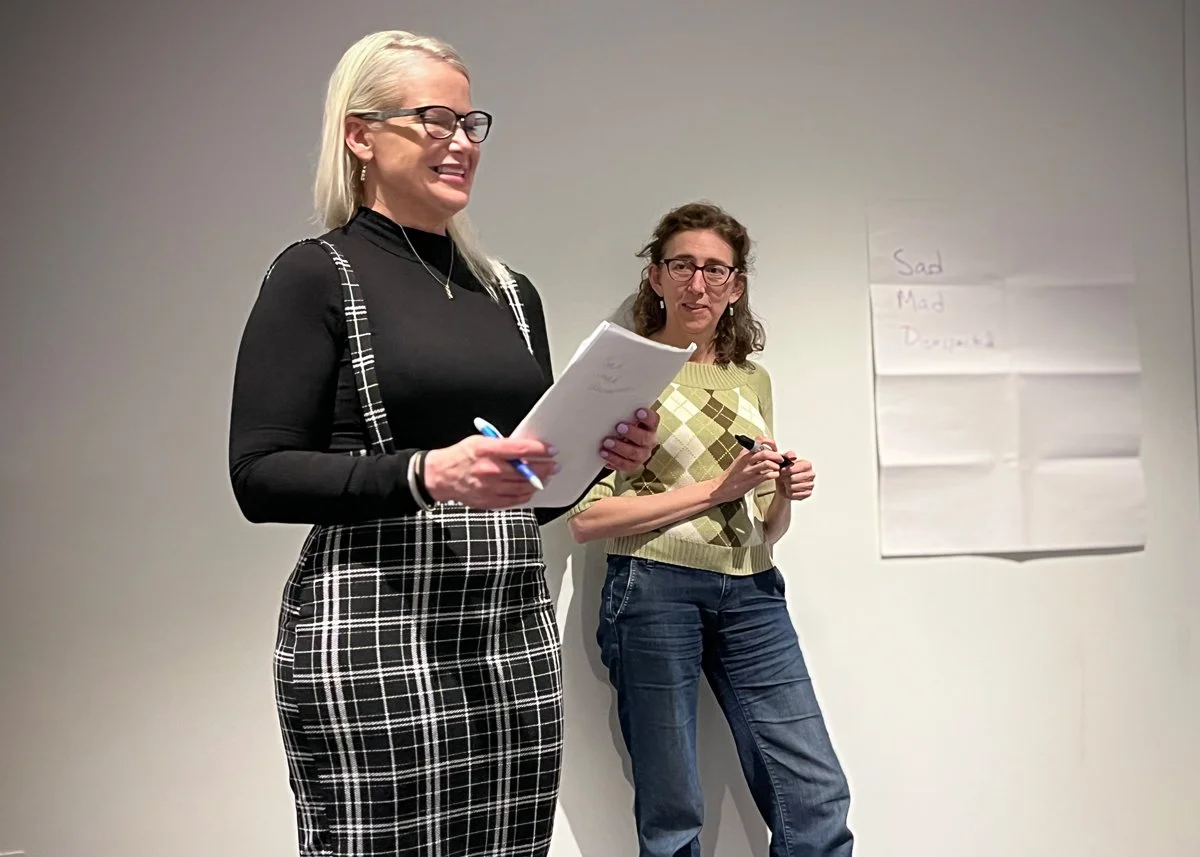
Mentor Kristen guides Shannon as she practices her teaching skills at the dress rehearsal for the event.
Volunteer Phuong celebrates the unique contributions the Ambassadors were able to make to the young people at the training. “Not only do the Ambassadors have this natural intrinsic empathy, but they were able to adapt with whatever situation the students were going through. That develops trust, self-efficacy and connection. Not only did the Ambassadors put their training in action–they were able to infuse some of their own life experiences and fun insights, and that helps the students engage and connect.”
Isa highlighted the learning and growth she has witnessed in the Ambassadors throughout their training and facilitation of this recent workshop. “I'm so proud of their openness and willingness to engage with this material, put a fresh spin on it, and make it their own….It's something very personal to us, and they are making it very personal to them, and that's wonderful.”
Phuong attributes the success of the program to the relationships built among Negotiation Works’ staff, Ambassadors, and mentors. ”It’s a program that creates a really strong intrinsic network of support with encouragement, building self-efficacy, and purpose for everyone involved–myself, the Ambassadors, and the communities that we serve. That’s pretty powerful.”
Kat hopes the Ambassadors have more opportunities to work with young people in the future. “I would love for us to get involved with more schools and more young people, teenagers, preteens, even maybe colleges. The younger the better, especially in challenging communities where there’s a lot of violence–it can save lives.”
That’s the power of negotiation.